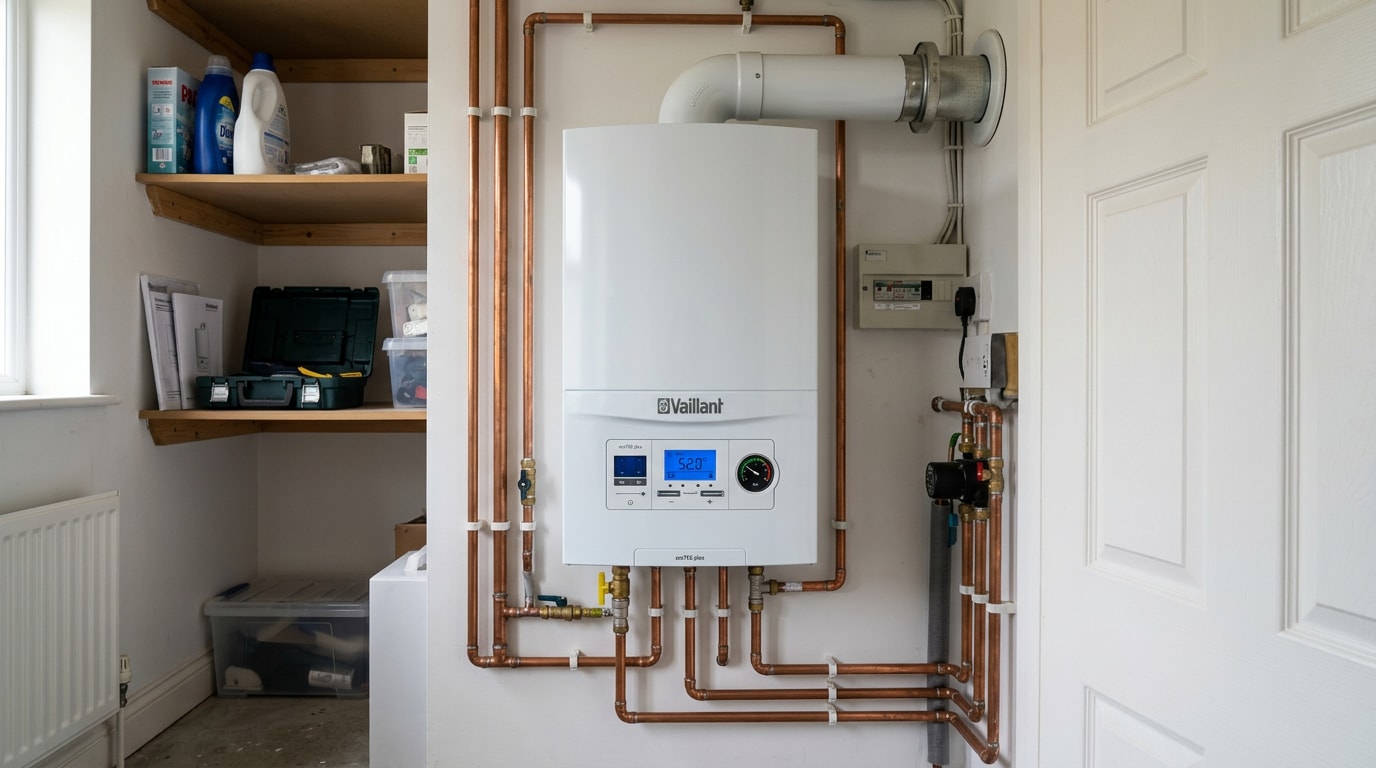
A boiler looks like a rectangular metal box or a tall cylinder, usually white, grey, or black, with a control panel, a pressure gauge, and pipes entering from the top, side, or bottom. In Butts County, GA, most of these units sit in a utility closet, garage, or laundry area instead of a basement, since the majority of local homes are built on slabs or crawl spaces. If you've never looked closely at yours, here's exactly what to check for.
What Does a Boiler Look Like?
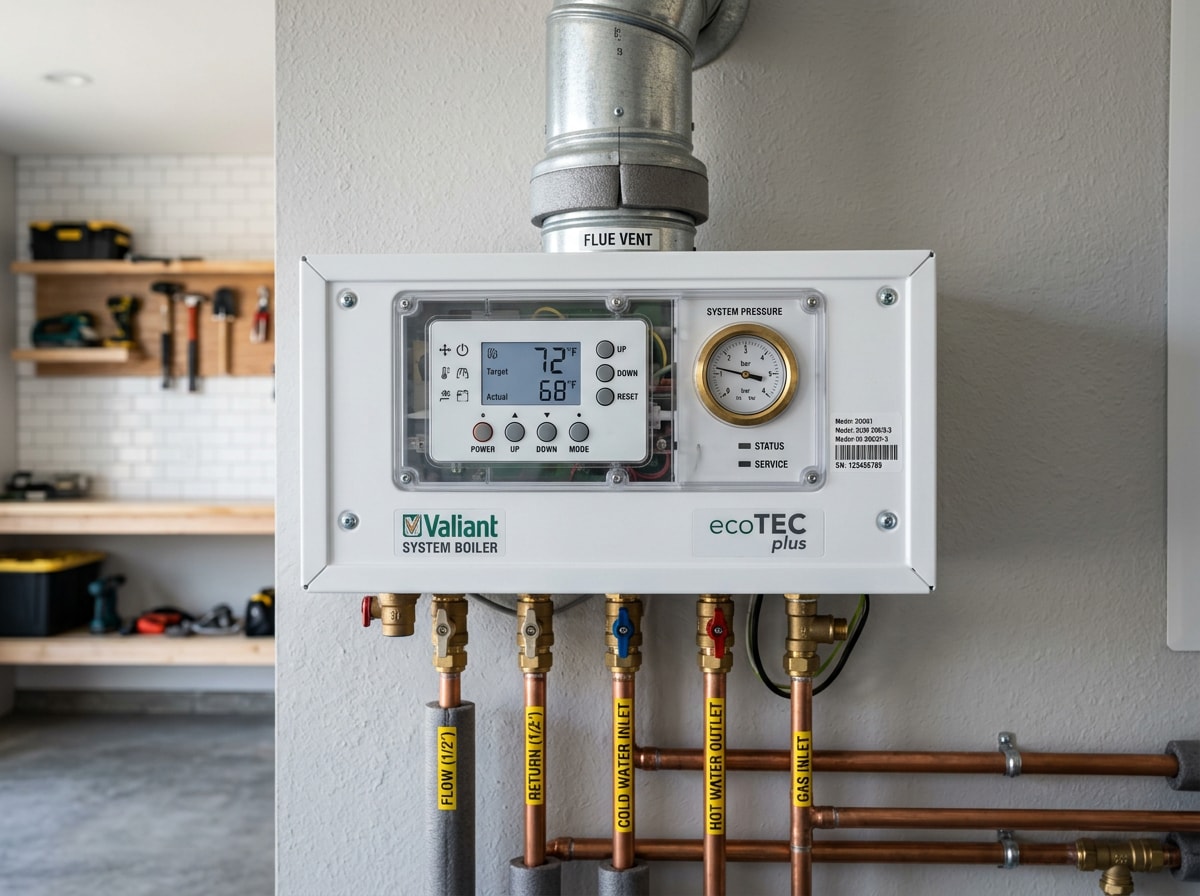
Short version: a boiler is a metal cabinet or cylinder, finished in a plain color, with a control panel on the front and several pipes connecting to it. Many also have a small round pressure gauge and a vent pipe leading outside.
Appearance varies more than most homeowners expect. Older water boilers tend to be tall and cylindrical, almost like a stout water heater, while newer units are typically boxy and compact enough to mount directly on a wall. Both styles share the same core identifiers:
- Visible plumbing connections entering and exiting the unit
- A control interface with buttons, dials, or a digital display
- An enclosure that hides the burner or heating element inside
- A pressure gauge, usually round and mounted on the front panel
What Is a Boiler?
A boiler is a hot water heating system that warms water, or occasionally produces steam, and circulates it through radiators, baseboard units, or radiant floor tubing. Unlike a furnace, it doesn't blow heated air through ductwork. The U.S. Department of Energy's furnaces heat air and distribute it through ducts, while boilers heat water and distribute it through pipes that feed radiators , which is the clearest way to separate the two systems at a glance.
Residential boilers come in two basic form factors. Wall-mounted units hang like a cabinet above the floor. Floor-standing models sit on their own base and often resemble a short filing cabinet. Both do the same job, they just take up space differently depending on your home's layout.
General Appearance of a Boiler
Look for a boxy or cylindrical metal housing, a control panel with buttons or a digital display, a round pressure gauge, and pipes entering from at least two directions. The finish is almost always practical rather than decorative: plain white, grey, or black enamel, sometimes with a manufacturer logo on the front panel.
The pressure gauge is worth learning to read. A needle sitting in the green zone, commonly 12 to 15 psi for a cold system, means normal operating pressure. A needle sitting in the red usually signals a problem that needs attention.
Here's a quick comparison of the two most common boiler shapes homeowners run into:
| Feature | Wall-Mounted Boiler | Floor-Standing Boiler |
|---|---|---|
| Typical size | Compact, about the size of a kitchen cabinet | Larger, roughly waist-high |
| Common finish | White or grey enamel panel | White, black, or metallic grey |
| Install location | Utility closet, kitchen cupboard, garage wall | Basement, garage floor, utility room |
| Pipe layout | Pipes usually enter from the bottom | Pipes often enter from the top or side |
Want a professional opinion on your specific setup? A technician from our heating contractor team can confirm what type you have and whether it's running the way it should during a free inspection.
Types of Boilers and How They Look
Not every boiler looks identical, even though they share the same basic parts. System and conventional boilers are usually bulkier, often paired with a separate hot water storage cylinder nearby. Electric and oil boilers tend to be more compact, self-contained units. Combi boilers, covered below, are the most visually distinct of the group.
Efficiency standards have also changed what modern boilers look like inside the cabinet, even if the outside appears similar to older models. ENERGY STAR certified gas boilers must hit annual fuel utilization efficiency (AFUE) ratings of 87% or greater for oil boilers and 90% or greater for gas boilers , and they reach that mark with electronic ignition, new combustion technologies that extract more heat from the same fuel, and sealed combustion that uses outside air to fuel the burner . That's why newer units are often smaller and more tightly sealed than boilers installed decades ago.
Combi Boilers
A combi boiler is a single wall-mounted unit with no separate storage tank, which makes it noticeably more compact than other types. Because there's no tank, it's commonly tucked into a kitchen cupboard, closet, or small utility space. Combi boilers almost always include a digital display on the front showing temperature settings and system status. If your "boiler" looks more like a tankless water heater bolted to the wall, there's a good chance it's a combi unit.
Where Boilers Are Usually Found in Butts County Homes
Boilers are typically installed in basements, utility rooms, kitchen cupboards, garages, or laundry areas, wherever there's room for the unit, its pipes, and ventilation. The exact spot depends heavily on how the home was built.
This matters more in Butts County than in a lot of other markets. Census data shows the county's housing stock is overwhelmingly detached single-family homes, making up 81.9% of all units , and most of those sit on slabs or crawl spaces rather than full basements. On service calls across Jackson and the rest of the county, I've found far more boilers mounted in a garage corner or wedged into a laundry closet than sitting in a basement, which is the opposite of what a lot of generic national guides assume.
If you're hunting for yours and there's no basement to check, start with the utility closet near the laundry area or a wall-mounted unit in the garage. Not sure if a technician covers your part of the county? Check our Butts County, GA service area page to confirm before scheduling a visit.
Why Knowing What a Boiler Looks Like Matters
Recognizing your boiler's normal appearance makes it much easier to spot trouble early. Rust streaks, pooling water near the base, or a pressure gauge sitting outside the green zone can all signal a developing leak or other boiler problems. Catching these signs before they become emergencies tends to save money and stress, and it helps you describe the issue clearly when you call a technician. For a closer look at common boiler-related repair costs nearby, our Boiler Price in Jonesboro, GA guide breaks down what homeowners typically pay.
Boiler vs. Furnace: What's the Difference?
The core difference comes down to how each system distributes heat. A boiler heats water or steam and sends it through radiators or baseboards. A furnace heats air and pushes it through ductwork and vents.
There's a fast visual tell, too:
- Round, relatively small copper or iron pipes running to radiators or baseboard units point to a boiler.
- Large square or round metal ductwork branching toward vents and registers points to a furnace.
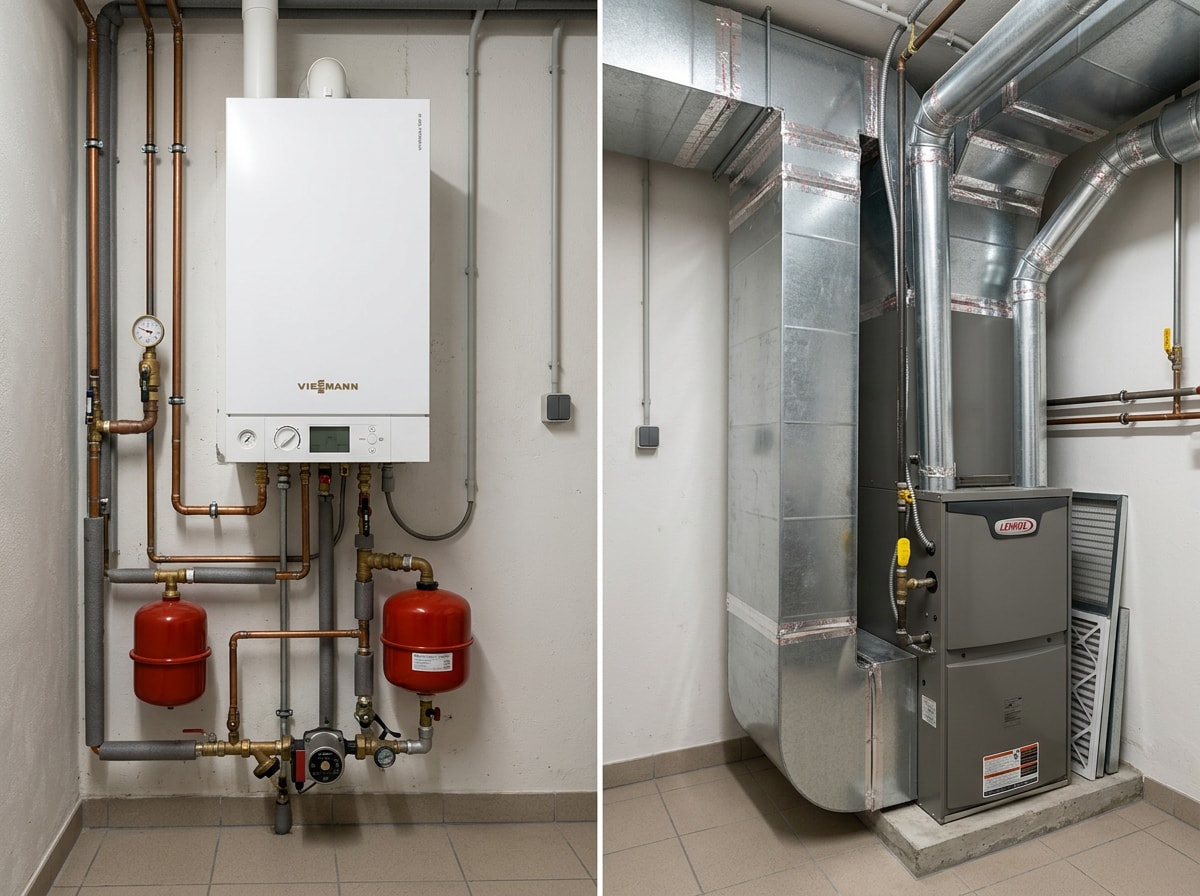
What a Furnace Looks Like
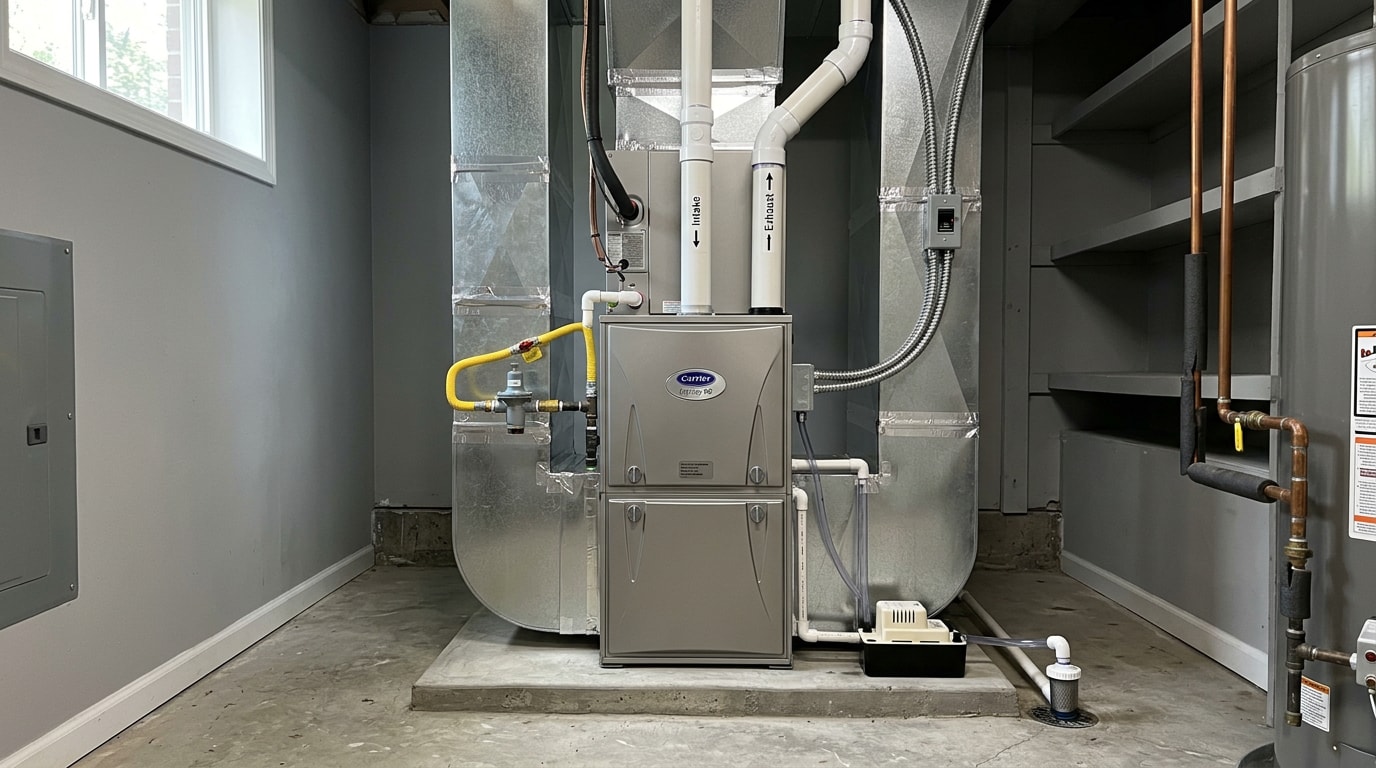
A furnace generally looks like a tall rectangular metal cabinet, usually larger than most boilers, connected directly to wide ductwork running through the ceiling, walls, or floor. Most furnace cabinets have a visible filter access panel or grill on the front or side, which boilers don't typically have. If you determine you actually have a furnace, our furnace repair and heating system maintenance pages cover what upkeep looks like for that system.
What Warning Signs Should You Watch For?
Boilers and furnaces fail in different ways, so the warning signs depend on which system you actually have.
Boiler Warning Signs
Watch for:
- Radiators that stay cold even when the system is running
- Banging or knocking noises in the pipes
- Visible water leaking near the unit
- The boiler cycling on and off more frequently than usual
Any of these can point to trapped air, a failing valve, or mounting pressure issues.
One important caveat: if you ever smell gas, notice soot around the unit, or hear a carbon monoxide alarm, leave the house immediately and call for professional help rather than attempting a DIY fix. CDC guidance on home heating safety is blunt about this: never use generators, grills, or other gasoline-, propane-, or charcoal-burning devices inside your home, garage, or carport, since they produce carbon monoxide, an odorless, colorless gas that kills more than 500 Americans each year . The same caution applies to any fuel-burning heating equipment that starts behaving oddly. If you need help right away, our emergency heating repair line is staffed for exactly this situation.
Furnace Warning Signs
A furnace showing a yellow or orange flame instead of a steady blue one, weak airflow from the vents, burning smells, or a blower that runs without producing warm air all suggest something needs attention. These issues often point to a combustion problem or a failing component inside the cabinet, and they shouldn't be ignored for long.
FAQ
Do all boilers look the same?
No. Boilers range from tall cylinders to boxy wall-mounted units to larger floor cabinets. Nearly all of them share the same core features: visible pipes, a control panel, and a pressure gauge.
Do I have a boiler or a furnace?
Check your heating outlets. Radiators or baseboard units connected by small round pipes mean you likely have a boiler. Vents and registers connected to ductwork mean you have a furnace.
Where is a boiler usually located in a house?
Most boilers sit in a basement, utility room, closet, or garage. In Butts County and other parts of Georgia without basements, closets and garages are the most common spots to check first.
Is a boiler the same thing as a water heater?
No, though they can look similar from the outside. A boiler heats water specifically to warm your home through radiators or baseboards. A water heater just heats water for showers, sinks, and appliances, and it isn't connected to your heating system at all.
What does a working boiler sound like?
A healthy boiler runs with a low, steady hum and an occasional click when it cycles on or off. Banging, gurgling, or whistling noises usually mean trapped air, mineral buildup, or a failing component, and they're worth having checked before they get worse.
How big is a typical residential boiler?
Most residential boilers are roughly the size of a dishwasher or a small filing cabinet, somewhere between 24 and 36 inches tall for wall-mounted combi units. Floor-standing models can be waist-high or taller, depending on tank capacity.
About the Author
This guide was reviewed by the HVAC technician team at HelpYourAC, a NATE-affiliated heating and cooling contractor serving Butts County and the greater South Metro Atlanta area. Our technicians inspect, service, and replace both boilers and furnaces across Jackson and the surrounding communities, and the local observations in this guide come directly from calls run in the field, not a manufacturer spec sheet. Have questions about your specific unit? Contact us or visit the HelpYourAC homepage to see our full range of heating and cooling services.