Boiler price in Jonesboro, GA typically runs $2,500 to $12,000 installed, depending on home size, fuel type, and system design. Most cost guides online are built around national averages that skip the details that actually matter here, like Clayton County permit rules and the local mix of natural gas and propane service. Below are 2026 ranges by size, fuel, and system, plus the add-on costs homeowners forget to budget for until the invoice arrives.
In our service calls across Clayton County and the south metro, we still run into 20-plus-year-old cast-iron boilers in older Jonesboro homes that were never upgraded after the original install. That matters for this guide: a straight like-for-like swap is almost always cheaper than converting fuel types or relocating equipment, so knowing which category you're in before you call for quotes saves real money.
Boiler Cost by Home Size in Jonesboro, GA
A home's square footage drives the BTU (British thermal unit) output a boiler needs to produce. Bigger homes need higher-capacity, costlier units to heat evenly. Insulation quality, ceiling height, and window count also matter, so two homes of the same square footage can still need different-sized systems.
| Home Size (sq ft) | Estimated BTU Output | Estimated Boiler Price Range |
|---|---|---|
| Up to 1,000 | 30,000–50,000 BTU | $2,500–$4,500 |
| 1,000–1,500 | 50,000–80,000 BTU | $3,500–$6,000 |
| 1,500–2,500 | 80,000–120,000 BTU | $4,500–$7,500 |
| 2,500–3,500 | 120,000–160,000 BTU | $6,000–$9,500 |
| 3,500+ | 160,000+ BTU | $8,000–$12,000+ |
Most homes in Jonesboro and the surrounding Clayton County area fall in the 1,500–2,500 sq ft range. That keeps boiler price in Jonesboro, GA toward the middle of these tables rather than at either extreme.
These figures are a starting point, not a quote. A licensed installer should run a proper Manual J load calculation, measuring insulation, window count, and duct layout before recommending a final BTU output. If you want that number confirmed for your specific home, our heating contractor team can walk through it during an on-site visit.
Boiler Cost by Fuel Type
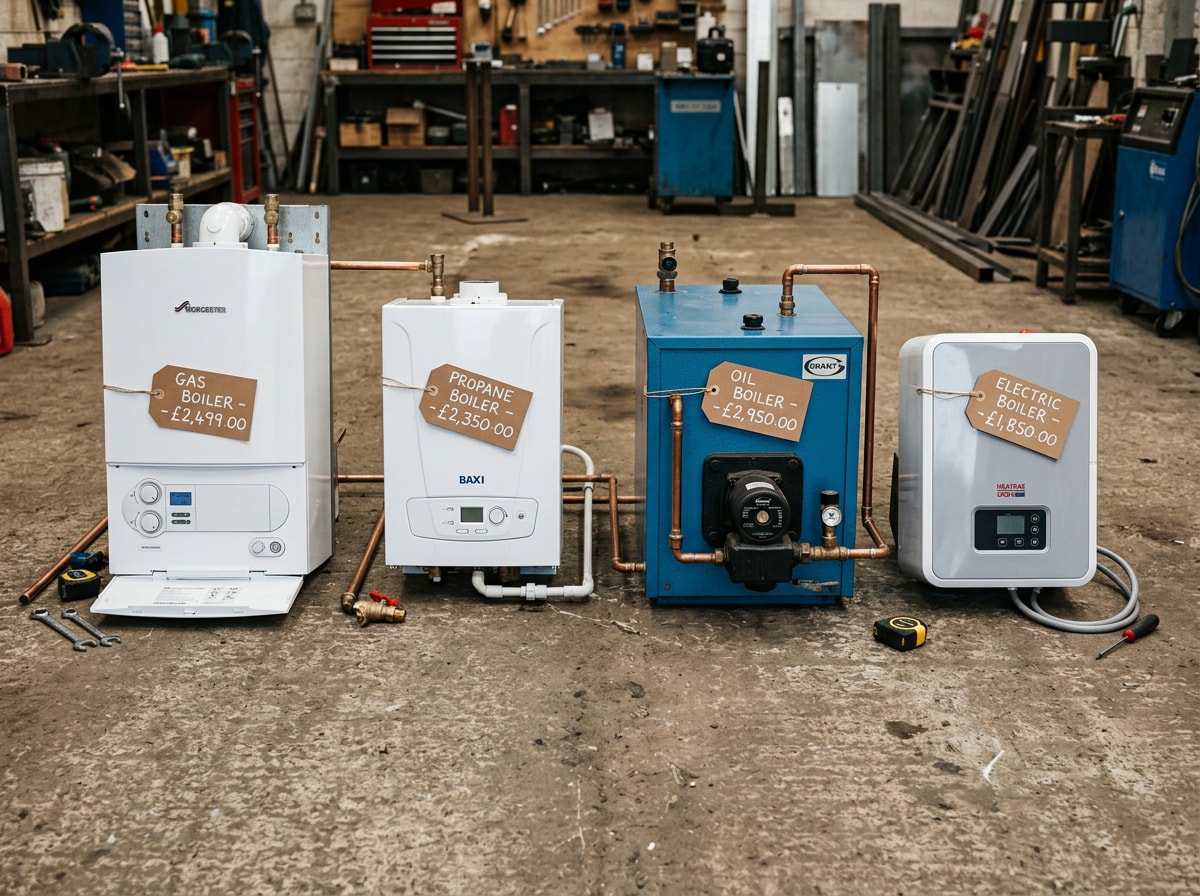
Fuel type is often the single biggest swing factor in boiler price. Natural gas and propane are the most common choices around Jonesboro, since municipal gas lines reach most neighborhoods and propane fills in where lines don't exist. Oil boilers, more common in the Northeast, are rarely installed in new metro Atlanta homes today.
| Fuel Type | Unit Cost | Installed Cost Range | Typical Efficiency (AFUE) |
|---|---|---|---|
| Natural Gas | $1,500–$4,000 | $4,000–$8,000 | 80–98% |
| Propane | $1,800–$4,500 | $4,500–$9,000 | 80–96% |
| Oil | $2,500–$5,500 | $5,500–$10,000 | 80–90% |
| Electric | $1,000–$3,000 | $3,000–$6,500 | 95–100% |
ENERGY STAR certified boilers have annual fuel utilization efficiency ratings of 87% or greater for oil boilers and 90% or greater for gas boilers , so a higher sticker price on a certified gas unit usually pays back over the system's lifespan through lower fuel use.
There's also a fuel-switching incentive worth knowing about locally. Atlanta Gas Light's business rebate program pays homeowners and businesses for installing a new natural gas condensing boiler with an efficiency rating of 90% TE or higher , with tiered amounts that scale by unit size. It's one of the few region-specific numbers that can actually change your math on gas versus propane.
Picture a 2,000 sq ft Jonesboro home currently heated with an electric boiler. Switching to natural gas might run $5,000–$7,000 installed, including a new gas line hookup. That could meaningfully lower monthly heating bills, but it's worth weighing against propane if gas service isn't already run to the property.
Boiler Cost by System Type
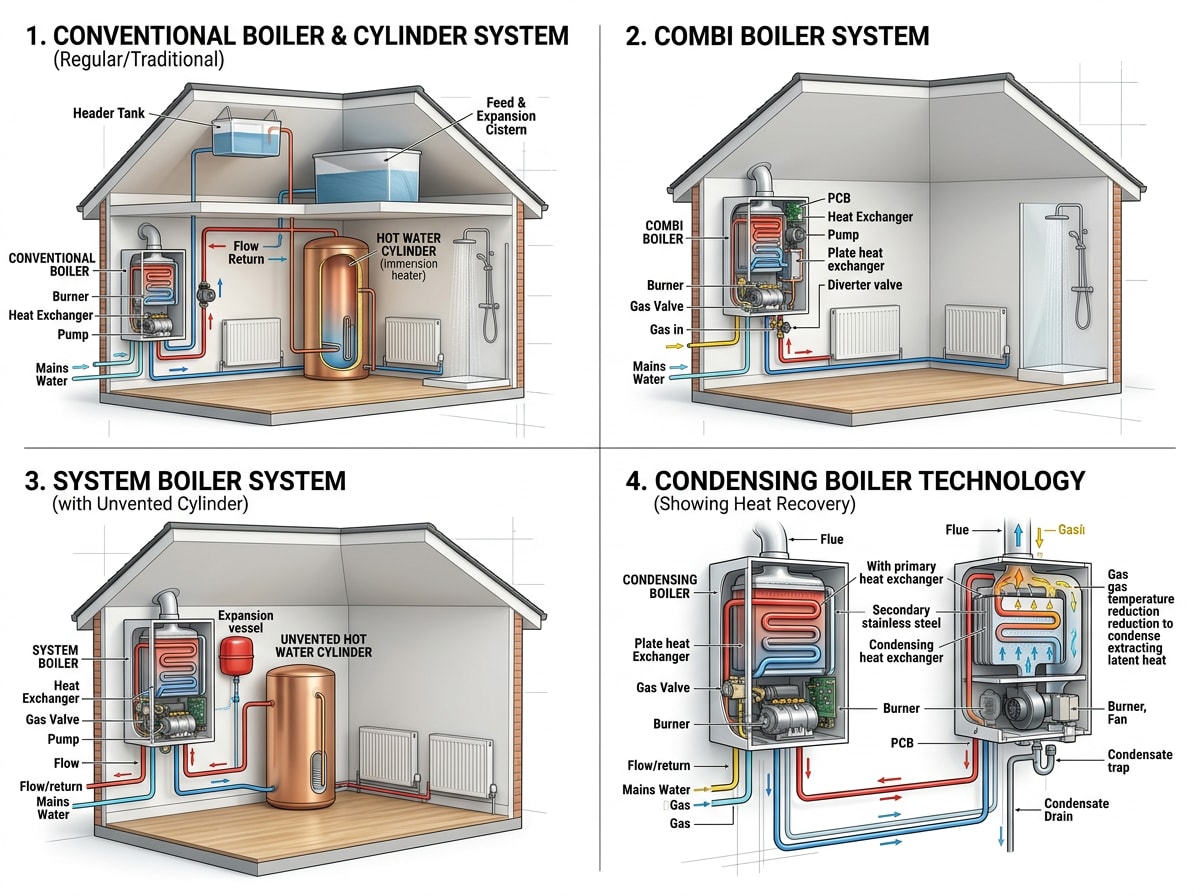
Beyond fuel, the boiler's internal design changes both price and performance.
- Conventional boiler: pairs with a separate hot water cylinder, works well in homes with an existing cylinder setup. Expect $2,500–$5,500 installed.
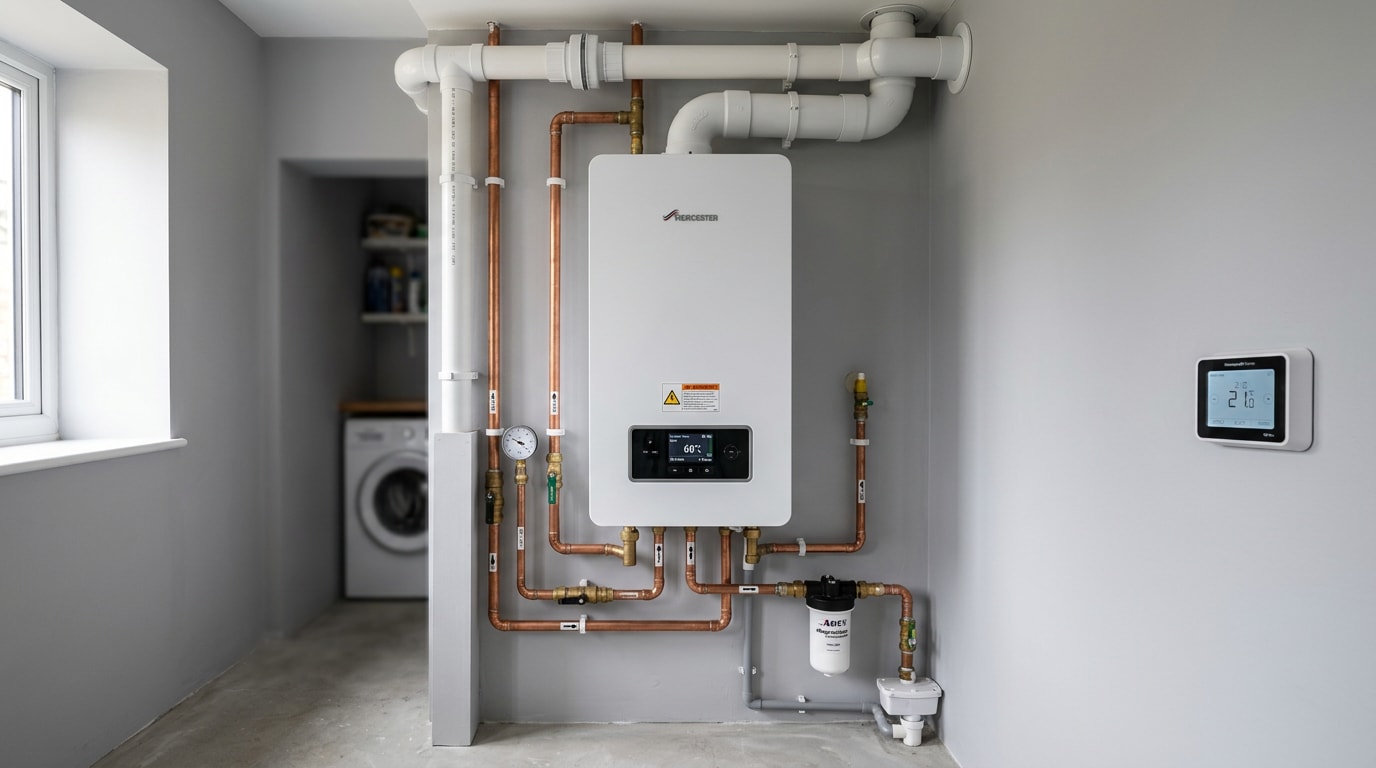
- Combi boiler: heats water on demand without a storage tank, saving space. Typically $3,000–$6,500 installed, and popular in smaller homes.
- System boiler: sits between the two, using an internal pump but still needing a cylinder. Usually $3,500–$7,000.
- High-efficiency, condensing boiler: captures extra heat from exhaust gases before it escapes, pushing AFUE above 90%. Costs more upfront, around $4,500–$9,500 installed, but lowers monthly fuel use over time.
Steam boilers are less common in newer Georgia construction; they heat water into steam for radiators. Hot-water boilers circulate heated water through pipes instead, and that's what most Jonesboro homes use.
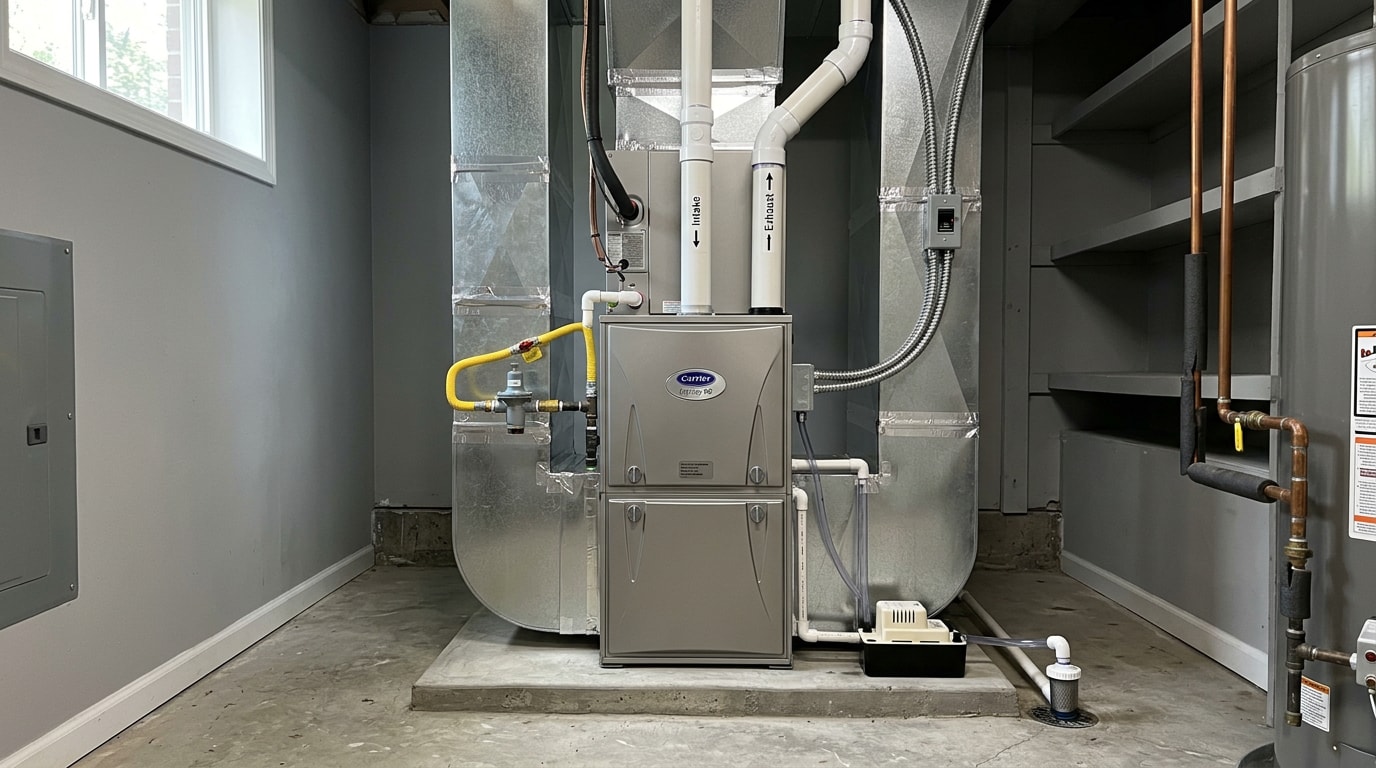
Not every home needs a boiler at all. If your current system is a forced-air furnace nearing the end of its life, it's worth comparing a furnace replacement against a boiler conversion before committing either way. Our furnace installation page breaks down that comparison for similar square footage and fuel setups.
Labor & Installation Costs
Installation labor typically runs $1,000–$3,000 on top of equipment price, depending on complexity. Most contractors charge an hourly rate of $75–$150, though many quote a flat price that bundles removal of the old unit, basic venting, and startup testing.
Usually bundled into the quote:
- Hauling away the old boiler
- Connecting existing gas and water lines
- A final system test
Usually billed separately:
- Electrical upgrades
- New gas lines
- Structural work to fit a larger unit
Converting fuel types, say from oil to gas, or relocating the boiler to a new spot in the home raises labor cost significantly. That work often means running new lines or venting through walls that weren't built for it.
Ask your installer for an itemized quote so you know what's included in the base price versus what counts as extra work. Schedule a free inspection and our techs will walk you through an itemized estimate before any work begins.
Additional Boiler Installation Costs to Consider
Permit and inspection fees are easy to overlook but required in nearly every Georgia jurisdiction for gas line and water heater work. The building permit section issues building, mechanical, electrical and plumbing permits for residential and commercial remodels, repairs, and new construction , and boiler installation falls squarely under mechanical and gas work. Expect roughly $50–$300 for permits, plus a separate inspection fee in some cases.
If you're installing in unincorporated Clayton County or Jonesboro proper, permits are pulled through the county's building permits office at P.K. Dixon Building Annex 2, 121 South McDonough St., Jonesboro, GA 30236, Monday through Friday 8:00 a.m. to 5:00 p.m. You can review current forms and requirements on the Clayton County building permits page before scheduling.
New builds tend toward the higher end of these ranges since they often require multiple inspections, rough-in, final, and sometimes a separate gas inspection, compared with a straightforward like-for-like replacement.
Other add-ons worth budgeting for include venting upgrades, a condensate pump for condensing units, and updated thermostats or zone controls. None of these are mandatory, but they come up often enough that a small buffer is wise.
Repair vs. Replace
A useful rule of thumb: if repair cost exceeds roughly 50% of a new unit's installed price, replacement usually makes more financial sense, especially on an older system. Boiler age matters too. Units past 15 years are more likely to need repeated repairs soon after an expensive fix.
A $600 repair on a 5-year-old boiler is an easy call. That same $600 repair on a 17-year-old unit nearing the end of its service life is money that might be better spent on a new, more efficient system.
Frequency matters as much as cost. Two or three repairs in a single heating season often signals the boiler is failing systemically, not just dealing with an isolated issue. If you're facing a no-heat situation right now, our emergency heating repair team can get a technician out same-day.
If you're also comparing a boiler against an electric furnace setup, our electric furnace guide for Rockdale County walks through that cost and performance trade-off in more depth.
Not sure which side of the repair-or-replace line your system falls on? Our furnace repair and heating technicians can diagnose the issue and give an honest recommendation rather than an upsell.
Ways to Save on Boiler Installation
High-efficiency units often qualify for utility rebates or tax credits that offset a few hundred to over a thousand dollars of the upfront cost. Beyond the Atlanta Gas Light program mentioned above, several diagnostic and maintenance procedures help maintain efficient boiler operation, and integrating them into a maintenance plan extends the useful life of the equipment , according to the U.S. Department of Energy's guide to purchasing energy-efficient boilers. In practice, that means a $150–$250 annual tune-up through our heating system maintenance plan can delay a $6,000+ replacement by years.
Getting three quotes from licensed installers before committing is one of the simplest ways to confirm a fair installation price rather than an inflated one. Pricing can vary by a thousand dollars or more between contractors for identical equipment.
Timing matters too. Scheduling installation in spring or fall, outside the peak winter demand window, often means more flexible contractor scheduling and occasionally better pricing. Bundling a boiler replacement with other planned home upgrades can also reduce per-project overhead if a contractor is already on-site for related work.
Homeowners throughout Jonesboro, GA can schedule a free inspection with the team at Help Your AC to get an exact, written quote before deciding between repair, replacement, or a fuel switch.
FAQ
How much does a boiler cost in Jonesboro, GA?
Most Jonesboro homeowners pay $4,000 to $9,000 installed for a mid-size natural gas boiler, with smaller homes landing closer to $2,500–$4,500 and larger homes or high-efficiency condensing units running $9,000–$12,000 or more.
Can a plumber install a boiler?
In most states, including Georgia, boiler installation requires a licensed HVAC technician or a plumber holding specific gas and heating certifications. A standard plumbing license alone usually isn't sufficient. Always confirm your installer carries the credentials required for gas line and heating system work before hiring.
Do I need a permit to install a boiler?
Yes. Most jurisdictions around Jonesboro, including Clayton County, require a permit for new boiler installations because the work involves gas lines, water connections, and sometimes electrical wiring. Fees typically fall within the ranges covered above, and skipping this step can create problems when you sell the home.
Is it cheaper to repair or replace a boiler?
Repair is usually cheaper short-term, but only makes sense if the cost stays under roughly half the price of a new installed unit and the boiler is under 15 years old. Beyond that, repeated repairs tend to cost more over a few years than replacing the system once.
How long do boilers last?
Most residential boilers last 15 to 20 years with regular maintenance, though high-quality units can reach 25 years before major components fail. Annual flushing and inspection meaningfully extend a system's working life compared with units left unmaintained.
Can I install a boiler myself?
DIY boiler installation isn't recommended and is illegal in most areas, since the work touches gas lines, water pressure systems, and electrical connections that require licensed inspection. Attempting it yourself can void manufacturer warranties and create serious safety hazards. For a safe, code-compliant installation, contact our team to schedule a licensed local technician.