Chiller HVAC systems in Newton County carry a heavier load than most homeowners realize, cooling everything from soundstages to server rooms around the clock. When one goes down, the cost isn't just comfort, it's lost production time, spoiled inventory, or an overheated data room. This guide breaks down what a chiller actually does, how to keep one running, and what local facility managers need to know before they call for service.
What a Chiller Does, and Why Newton County Leans on Them
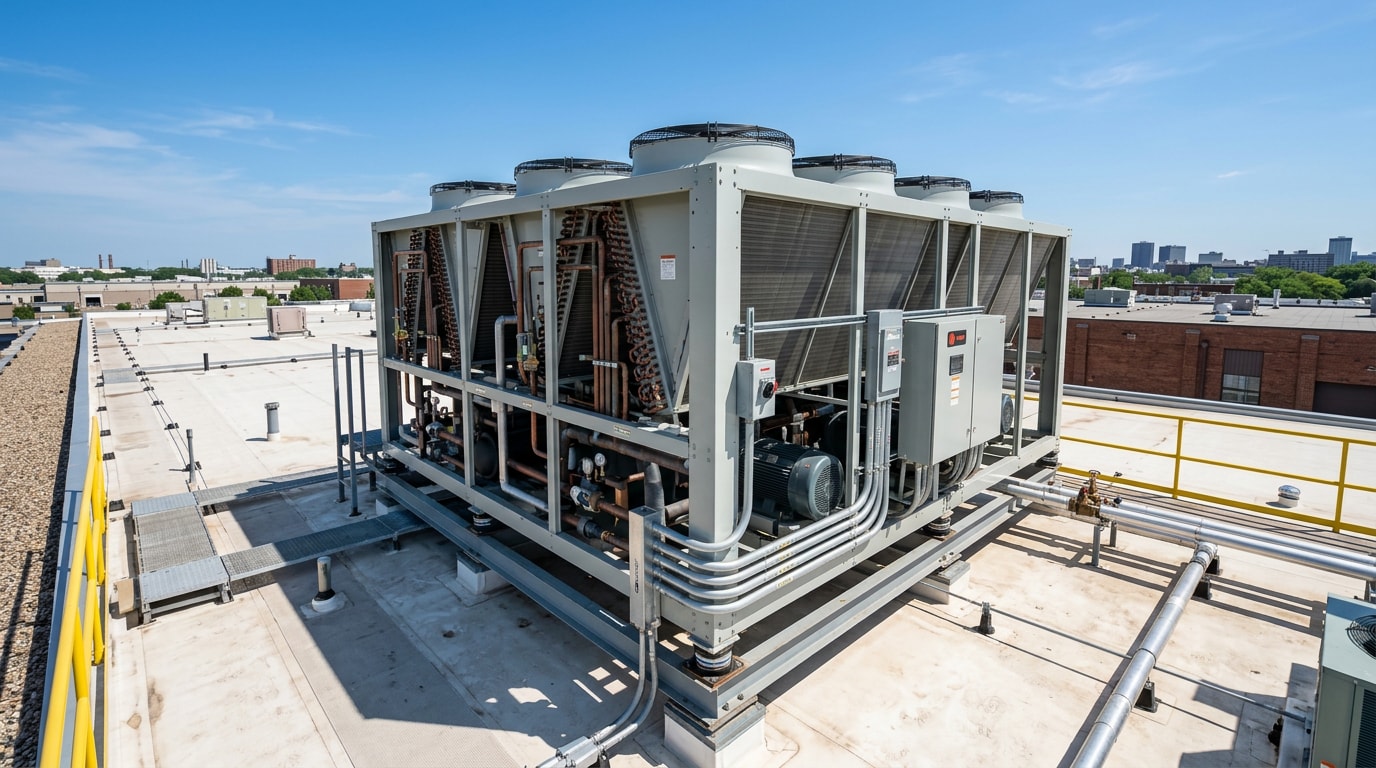
A chiller removes heat from water or another fluid, then circulates that chilled fluid through a building to cool the air. It's a different animal from a standard split system or rooftop unit, and it's the backbone of cooling for any facility with a large, continuous load.
Newton County has more of those loads than its population size suggests. The Cinelease Studios Three Ring campus in Covington runs dozens of soundstages and support buildings that need stable temperatures for equipment and sets year-round. Meta's Stanton Springs data center campus, straddling Newton and Walton counties, represents one of the largest chilled-cooling operations in the Southeast. Schools, medical offices, and manufacturing plants across the county round out the demand.
For critical operations like data rooms, medical suites, or active production sets, the stakes climb even higher. A single afternoon of downtime can ripple through a whole week's schedule.
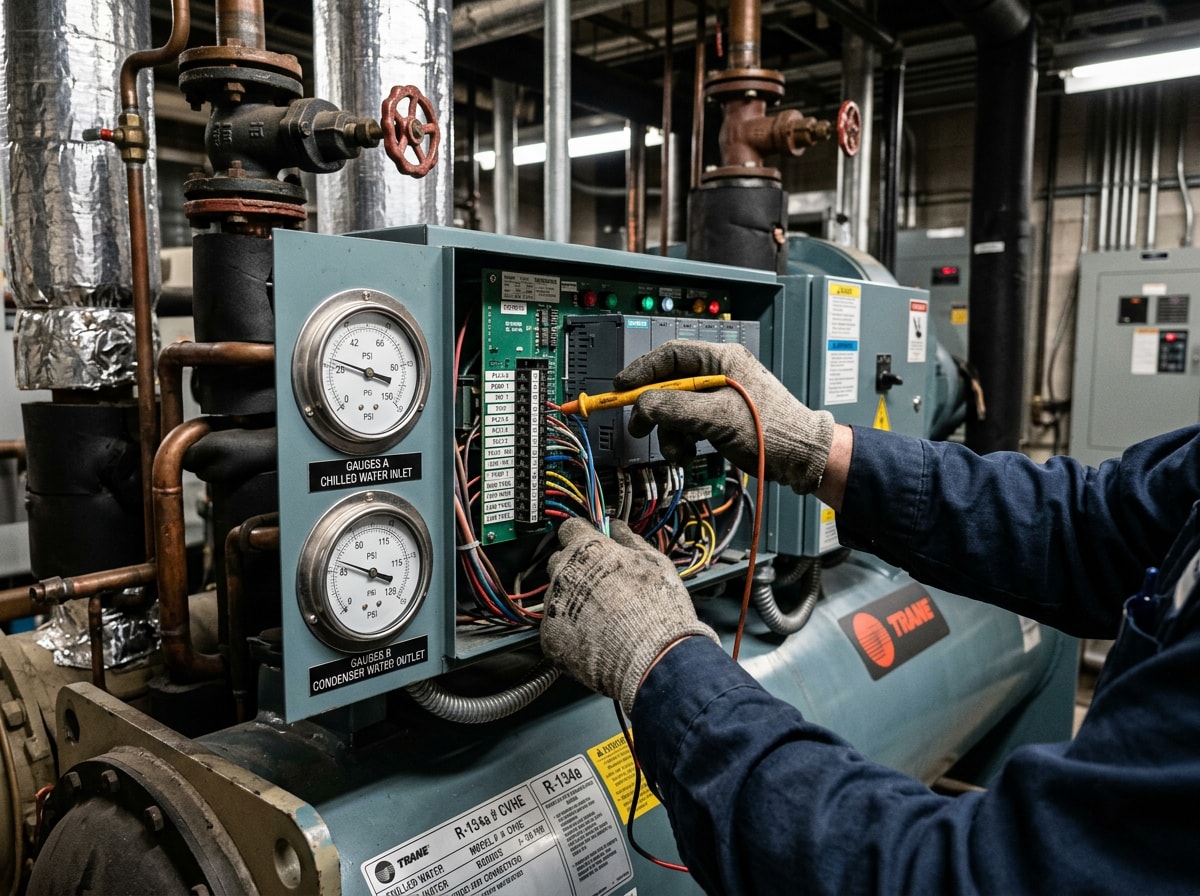
If you manage one of these facilities, our Newton County service area page outlines what local coverage looks like, and you can schedule a free inspection directly if something already feels off.
Chiller Types and Core Service Capabilities
A qualified chiller provider should handle far more than basic repairs. Coverage typically spans every major chiller category:
- Air-cooled chillers
- Water-cooled chillers
- Screw chillers
- Centrifugal chillers
- Reciprocating chillers
- Scroll chillers
- Absorption chillers
Core services built around those systems usually include:
- Chiller diagnostics and performance analysis
- Coil and condenser cleaning
- Controls calibration
- Component-level repairs
- Preventive maintenance programs
Together, these services form the backbone of keeping commercial chillers efficient year-round. For related work on a facility's broader HVAC footprint, see our full commercial HVAC service and repair lineup.
Chiller Repair, Replacement, and Retrofits
Not every chiller problem calls for a new system. A failing compressor, worn motor, or corroded heat exchanger can often be addressed with targeted repair at the component level, extending the unit's useful life at a fraction of replacement cost.
When a system is outdated, undersized, or repeatedly failing, replacement or a retrofit becomes the more cost-effective path. Retrofits can modernize controls and refrigerant type without a full equipment swap, which matters as older refrigerants get phased down.
Non-Invasive Diagnostics and Predictive Maintenance
Non-invasive diagnostics use vibration analysis, oil analysis, and infrared or eddy current testing to spot wear before it causes a breakdown. This approach, often called predictive maintenance, catches small issues early so facilities avoid unplanned downtime and expensive emergency calls.
If a chiller is also tied into refrigerant-side issues, our refrigerant recharge service covers low-charge diagnosis separately from mechanical repair work.
Maintenance Schedules and EPA Certification Rules
A proactive maintenance program protects uptime and lowers operating costs. The table below reflects general commercial chiller PM intervals; exact frequency should adjust based on run hours and documented inspection results.
| Task | Typical Frequency |
|---|---|
| Operating log review (pressures, temps) | Daily |
| Oil level and refrigerant sight glass check | Monthly |
| Controls calibration verification | Monthly |
| Oil and refrigerant analysis | Quarterly |
| Vibration analysis | Quarterly |
| Condenser/coil cleaning | Quarterly to annual |
| Eddy current tube testing | Annual |
| Full mechanical inspection | Annual, pre-season |
ANSI/ASHRAE/ACCA Standard 180 is the industry benchmark many Georgia contractors reference when building these schedules; it sets minimum HVAC inspection and maintenance requirements for commercial buildings.
Refrigerant handling isn't a job for just anyone. Technicians working on commercial chillers must hold EPA Section 608 certification, and large low-pressure chillers specifically require Type III certification, a separate credential from the Type II certification most residential and light-commercial techs carry. The EPA's own guidance confirms certification is required for anyone whose work could reasonably release refrigerant into the environment. That's a legal requirement, not a marketing line, and it's worth asking any provider which certification level their techs actually hold before they touch a low-pressure system.
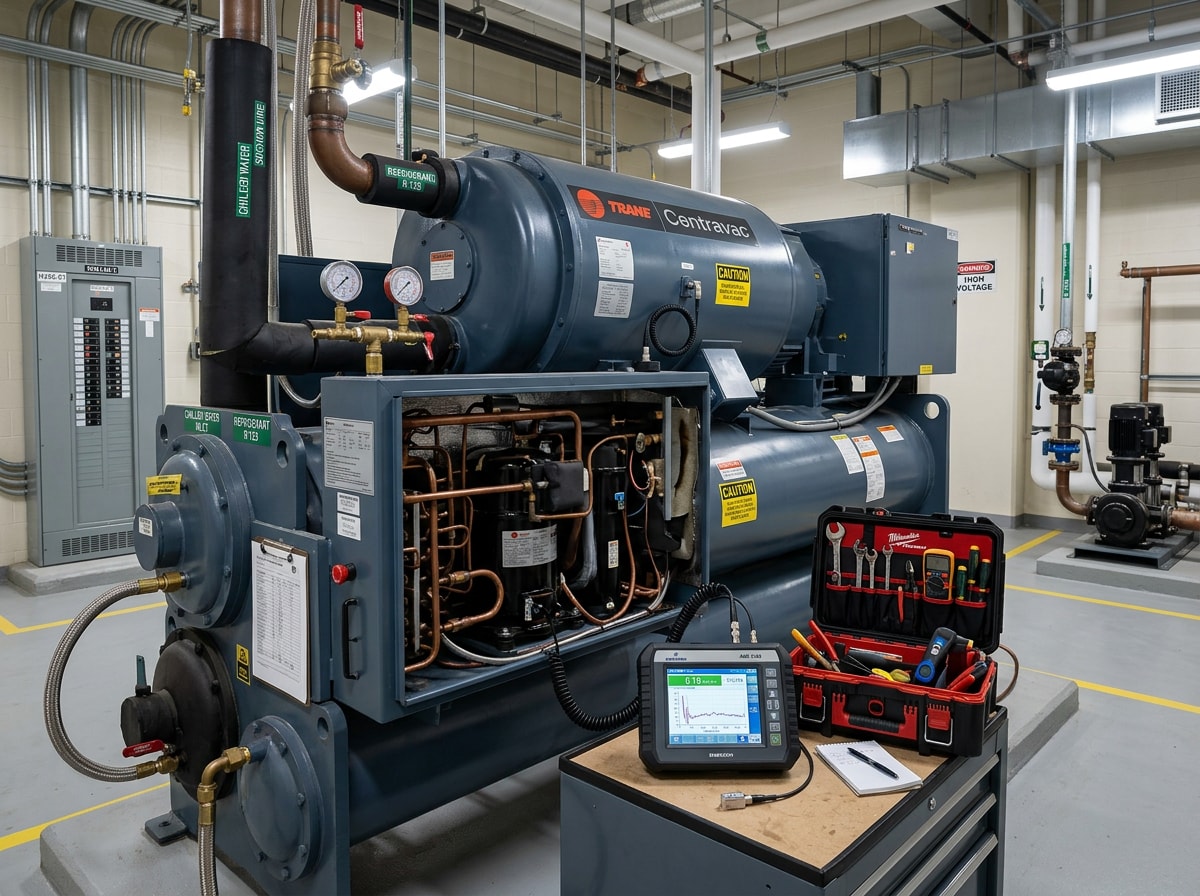
Routine upkeep like this overlaps with standard HVAC maintenance and air conditioning maintenance work on the rest of a building's system, which is worth bundling into one service visit where possible.
Chiller Lifespan: Air-Cooled vs. Water-Cooled
Service life varies by technology, and the gap between a well-maintained and neglected chiller is larger than most owners expect.
| Chiller Type | Typical Service Life | Notes |
|---|---|---|
| Air-cooled | 15 to 20 years | Simpler install, no water source needed |
| Water-cooled | 20 to 30 years | Higher upfront cost, better efficiency at scale |
| Centrifugal | Often longest-lived of the three | Tends to outlast screw and reciprocating units |
The U.S. Department of Energy's federal efficiency program assumes a 23-year operating life when calculating lifetime energy costs for electric chillers, a useful baseline when comparing repair costs against a full replacement. Consistent maintenance, not luck, is what pushes any unit toward the upper end of its range.
Air-cooled units skip the cooling tower and water treatment entirely, which lowers maintenance complexity but comes at an efficiency cost for larger buildings. Our guide on air cooled condenser services walks through that tradeoff in more detail for nearby McDonough facilities, and the logic holds for Newton County too. If you'd rather talk through your specific building's numbers, our contact page is the fastest way to get a straight answer.
For a sense of how local commercial HVAC troubleshooting plays out closer to home, see our guide on an AC condenser not turning on in Newton County, which covers a related failure point on the cooling side of these systems.
Facility managers juggling multiple buildings across the region can also browse our HVAC contractor services page or check our projects for completed commercial work, and our homepage has the full service directory if you're not sure where to start.
FAQ
What is a chiller in HVAC?
A chiller is a mechanical system that cools water or a water-glycol mix, then pumps that chilled fluid through coils to remove heat from a building's air. It's distinct from a standard air conditioner, which cools refrigerant directly and blows conditioned air through ducts.
What types of commercial chillers do contractors service?
Qualified contractors typically service centrifugal, screw, reciprocating, and scroll chillers, along with air-cooled and water-cooled configurations, across most commercial building types.
Do chiller technicians handle both HVAC and refrigeration emergencies?
Yes. A single dispatch can usually cover chillers, boilers, rooftop units, and commercial refrigeration. Look for providers offering true emergency air conditioning repair coverage rather than next-business-day scheduling.
How often should a commercial chiller be serviced?
Most commercial chillers need a full service at least annually, with quarterly checks recommended for heavy-use systems. Actual frequency depends on run hours, environment, and chiller type, and ASHRAE Standard 180 offers a useful baseline for scheduling those intervals.
How long does a commercial chiller last?
Air-cooled chillers often run 15 to 20 years, while water-cooled systems can reach 20 to 30 years with consistent maintenance. Centrifugal models tend to outlast screw and reciprocating designs, and the DOE's own lifecycle assumptions put average operating life around 23 years for electric chillers.
What's the difference between air-cooled and water-cooled chillers?
Air-cooled chillers are simpler to install and use no water, making them common for smaller facilities. Water-cooled chillers cost more upfront but run more efficiently at scale, which is why they show up more often in larger campuses like data centers and hospitals.
How much does chiller repair typically cost?
Costs vary widely by component and chiller size, from a few hundred dollars for a sensor or control board to well into five figures for a compressor replacement on a large centrifugal unit. A proper diagnostic visit is the only reliable way to get a real number for your system.