AC condenser not turning on in Newton County, GA is almost always one of six things: no power, a bad thermostat signal, blocked airflow, a dirty filter, a tripped condensate switch, or a failing capacitor. Work through these in order before you assume the compressor is dead — most "silent" outdoor units start back up once the real cause is found, not after an expensive repair. Our technicians run this exact checklist on 95-degree afternoons across Covington and the rest of Newton County, and more often than not it's something you can fix in minutes.
Here's what to check first, in the order that solves the most calls fastest:
- Tripped breaker, blown fuse, or an open disconnect switch by the condenser
- Thermostat set wrong, dead batteries, or a dropped Wi-Fi connection
- Leaves, grass, or shrubs blocking the outdoor unit's airflow
- A clogged air filter that's frozen the indoor coil
- A tripped condensate safety float switch
- A failed capacitor or worn contactor
Visit Legacy HVAC Services to see our services and request a free estimate.
Check the Power Supply & Circuit Breaker
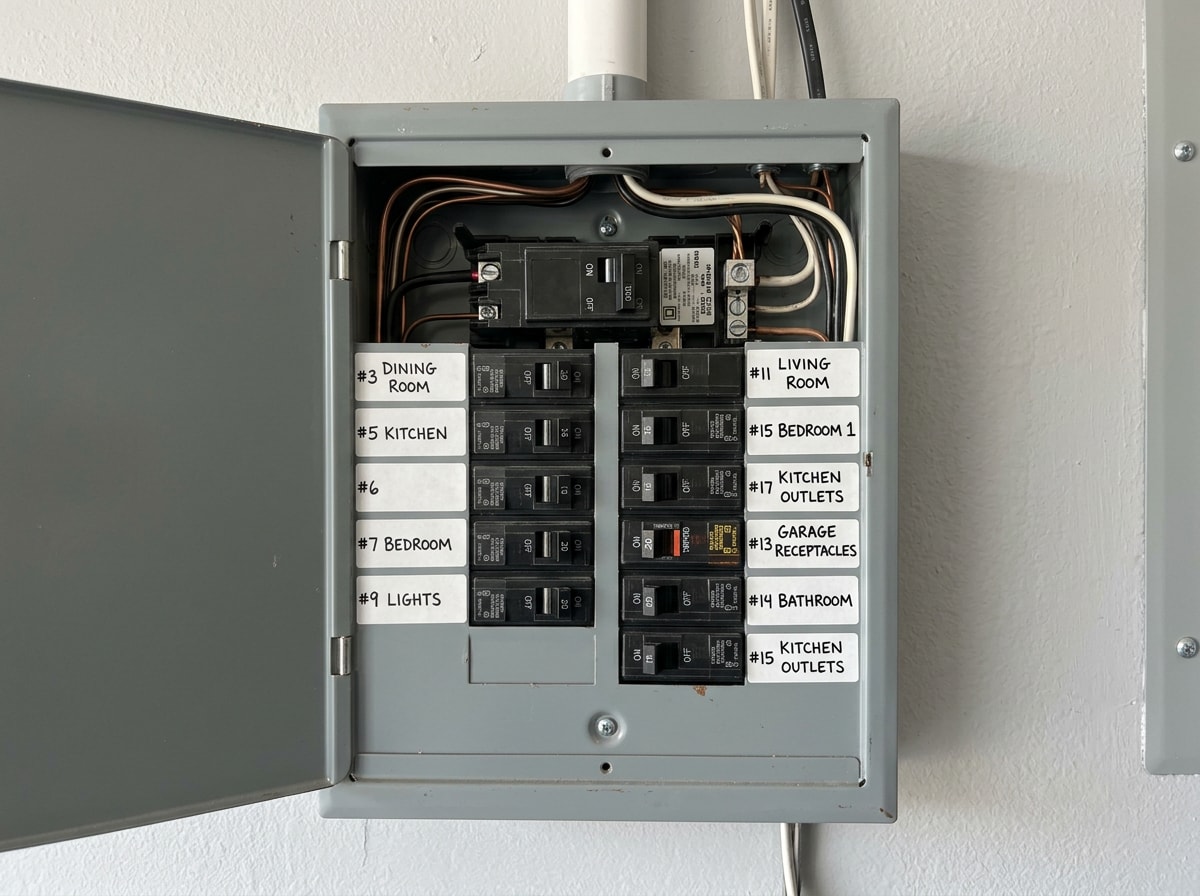
Start at the source. A tripped breaker, a blown fuse, or a flipped disconnect switch near the condenser are the most common reasons the unit loses power entirely.
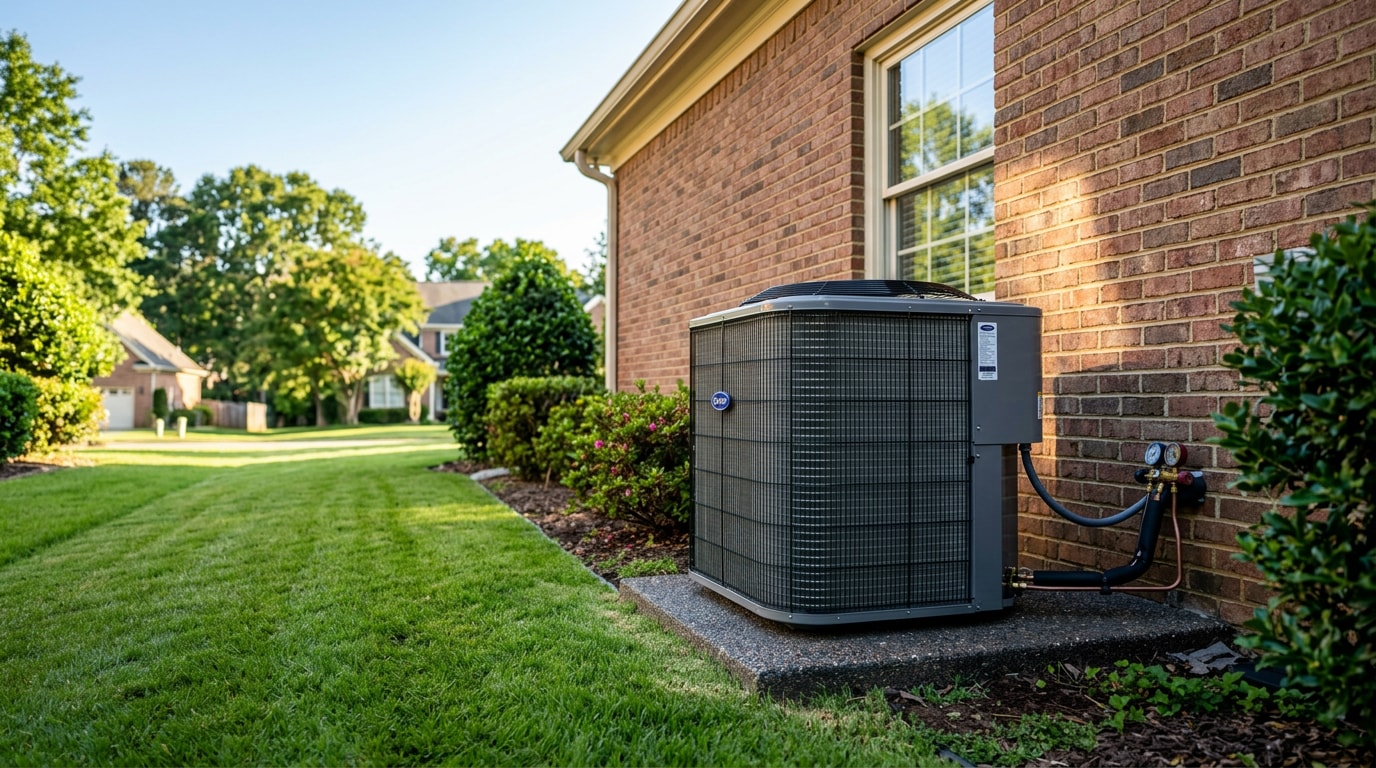
The disconnect is usually a small gray box mounted on the wall right beside the outdoor unit. Check that it's pushed fully in.
If the breaker looks tripped, switch it fully off, wait about 30 seconds, then switch it back on. If it holds and the condenser starts, you're done.
If it trips again right away, stop resetting it. That's a sign of a short or an overloaded circuit, not something to keep forcing.
The U.S. Consumer Product Safety Commission's longstanding consumer guidance is blunt about this: investigate to determine why a fuse blows or a circuit breaker trips, rather than simply replacing the fuse or resetting the breaker . A breaker that won't hold needs an electrician, not another reset.
Don't open the electrical panel cover or touch any wiring beyond flipping a clearly labeled breaker.
Inspect the Thermostat
Confirm the thermostat is set to cool mode and the target temperature is several degrees below the current room temperature. It sounds obvious, but it's the single most overlooked fix.
Dead batteries or a blank display are the next most common culprit, especially on older mechanical thermostats.
Smart thermostats fail differently. A dead battery usually just blanks the screen. A smart thermostat, on the other hand, can lose its connection to the condenser's control board after a firmware update or a dropped Wi-Fi signal.
Most condensers also have a built-in delay, typically around five minutes, that prevents the compressor from short-cycling and damaging itself. If you just reset the breaker, wait a full ten minutes before deciding the thermostat still isn't communicating.
Rule Out a Bad Capacitor or Contactor
If the thermostat and breaker check out but the outdoor fan still won't spin, the next suspects live inside the condenser cabinet itself: the capacitor and the contactor.
The capacitor gives the fan motor and compressor the jolt of energy they need to start. When it fails, you'll often hear a humming or clicking sound instead of the fan actually spinning.
The contactor is the relay that lets power reach the compressor once the thermostat calls for cooling. A worn or pitted contactor can stop that signal cold, even though everything upstream looks fine.
Neither part is a DIY fix. Capacitors hold a charge even with the power off, and a wrong diagnosis here can turn a cheap part swap into a compressor replacement. This is where a licensed AC repair technician earns their visit.
Clear Airflow Blockages Around the Condenser
Leaves, grass clippings, pollen, and overgrown shrubs trap heat against the coil and can trigger an overheating shutdown that protects the whole unit by shutting it down.
This is especially common in spring, when pollen coats everything in Newton County, and after summer storms scatter debris across yards.
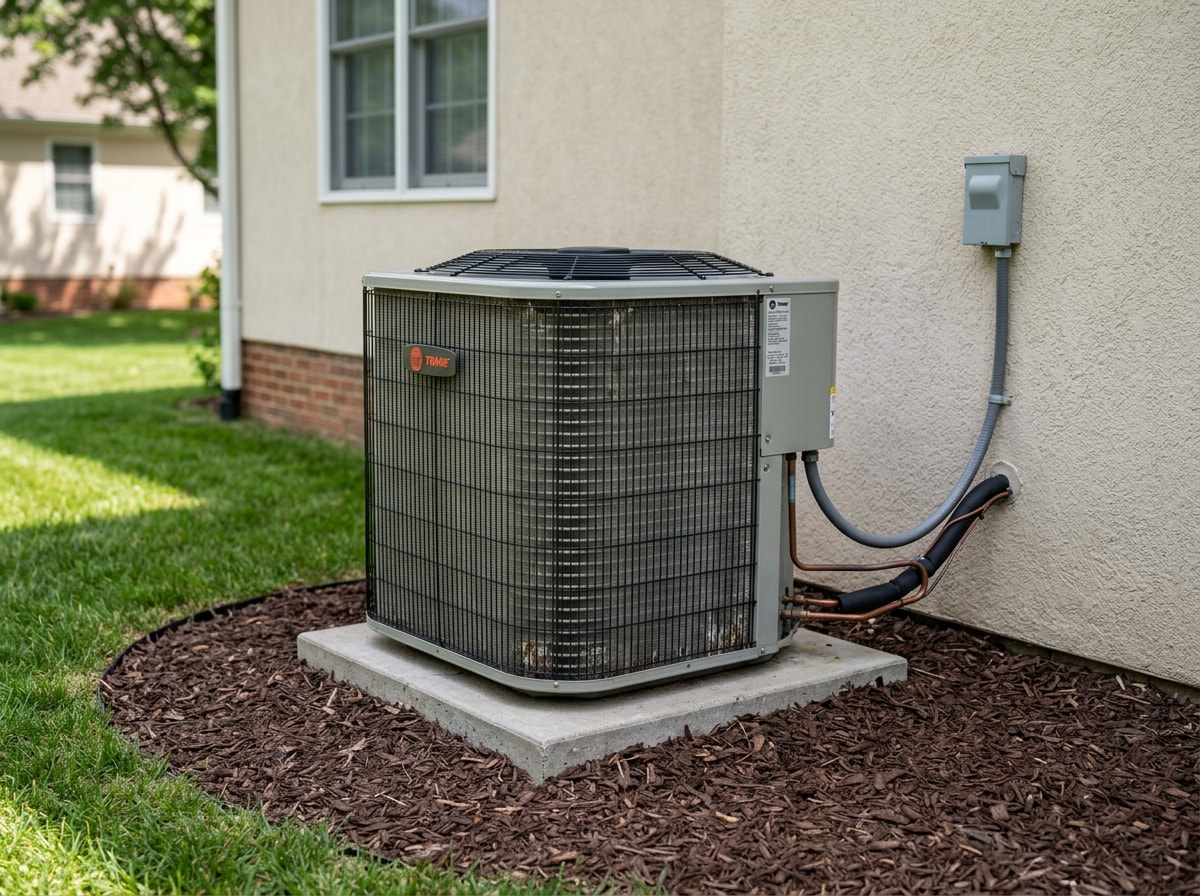
Keep at least two feet of clear space around the condenser on all sides. Check again after mowing or major yard work.
If vines or shrubs have grown into the cabinet itself, clear them by hand before attempting a restart.
Check the Air Filter
A severely clogged filter restricts airflow enough to freeze the indoor evaporator coil. Once that happens, many systems trip a safety switch that shuts down the entire unit, outdoor condenser included.
It's easy to overlook since the problem starts indoors but shows up as a silent condenser outside.
Pull the filter and hold it up to a light source. If light barely passes through, it's restricting airflow and needs replacing.
Most homes need a filter swap every 30 to 90 days depending on pets, dust, and filter type. A dirty filter also costs you money well before it causes a shutdown: a dirty air filter will cause your heating and cooling system to work harder to distribute air throughout your home, which can increase energy costs and damage your equipment, leading to early failure .
Check the Condensate Pump and Drain Switch
A clogged condensate pump or drain line fills the drain pan until it trips a float switch, a safety feature that shuts the system down to prevent water damage.
It's one of the most frequently overlooked reasons a condenser appears dead, since the pump itself sits indoors or in an attic, nowhere near the outdoor unit.
Locate the pump, usually near the indoor air handler. Check the line for visible clogs or standing water and clean out anything you can reach.
Then gently lift the float switch by hand. If the system attempts to start, the switch and drain were the problem. ENERGY STAR's own maintenance checklist backs up why this matters: a plugged condensate drain can cause water damage in the house and affect indoor humidity levels , which is exactly why the safety switch exists in the first place.
Why Newton County's Humidity Makes This Worse
Newton County sits squarely in Georgia's humid subtropical belt, and that moisture does real work on outdoor equipment over time. Georgia's climate is characterized by long, hot and humid summers and short, usually mild winters , which means condensers here run longer cycles than equipment in drier states just to pull moisture out of the air.
Longer run times mean more wear on the same parts covered above: coil fins, capacitors, and contactors all take more of a beating in a Covington summer than they would in Colorado or Arizona.
That's a big part of why coil cleaning and a pre-summer capacitor check matter more here than the manufacturer's generic maintenance schedule assumes.
Preventive Maintenance That Prevents These Calls
Most of the failures above are preventable with a few recurring habits:
- Clean the condenser coil at least once a season so dirt and grime don't insulate it against normal heat transfer.
- Keep the two-foot clearance around the unit year-round, not just after you notice a problem.
- Replace the air filter on a 30-to-90-day schedule based on your household.
- Have the condensate line and float switch inspected before peak summer use.
These four habits cover the majority of "won't turn on" service calls before they ever happen. A seasonal AC maintenance visit bundles all of this into one predictable appointment instead of four separate problems to track yourself. If the filter is the recurring issue, a standing air filter replacement plan solves it permanently.
HVAC Diagnostic Service in Covington and Newton County
If you've checked the breaker, thermostat, airflow, filter, and condensate switch and the condenser still won't start, it's time to call in a technician.
Capacitor failures, bad contactors, compressor issues, and refrigerant problems all require specialized meters and training that go beyond homeowner-level troubleshooting.
Covington, the Newton County seat, and the surrounding Newton County area see this exact call pattern every summer. A technician can usually pinpoint the issue in a single visit rather than guessing through repeated part swaps.
If the unit is completely dead on a hot day, don't wait it out. Our emergency AC repair service covers exactly this kind of no-cool call. You can also schedule a free inspection any time the checklist above doesn't get your condenser running again.
If your real complaint is weak airflow or warm air rather than a completely silent unit, the troubleshooting is different — see our guide on AC units not blowing cold air in South Metro Atlanta for that scenario.
For a full look at how we handle comfort projects across the area, visit HelpYourAC or browse our completed projects.
FAQ
Why is my outside AC unit not turning on but the inside unit still runs?
In a split system, the indoor blower and outdoor condenser run on separate circuits and controls. A tripped breaker, open disconnect, or tripped safety switch can silence just the outdoor unit while the indoor blower keeps circulating air.
How do I reset my AC condenser unit?
Turn the thermostat off, flip the breaker off for several minutes (or press the outdoor reset button, if your unit has one), then restore power and set the thermostat back to cool. Give it a full 10 minutes before deciding the reset didn't work.
Why does my condenser hum or click without the fan spinning?
That's the classic sound of a failing capacitor or a contactor that's trying to engage but can't complete the connection. Don't keep flipping the breaker hoping it clears on its own — this is a job for a licensed technician, since capacitors hold a charge even with the power off.
Is it safe to keep resetting a breaker that keeps tripping?
No. A breaker that trips once might just need a reset. A breaker that trips repeatedly is telling you there's a short or an overload, and forcing it back on repeatedly risks damage to the equipment or the wiring itself.
How much does it cost to fix an AC condenser that won't turn on?
It varies widely depending on the cause. A blown fuse or a capacitor swap is typically a modest repair, while a failed compressor or full condenser replacement costs significantly more. A technician can give you an exact number after diagnosing the actual problem.