Finding the best furnace for a Fayetteville, GA home isn't about chasing the highest AFUE number on a spec sheet. It's about matching fuel type, size, and staging to a climate that's mild most of the year but still throws hard cold snaps at us. This guide walks through the real tradeoffs, 2026 pricing, and sizing math before you sign a contract.
Do You Even Need a Furnace in Georgia?
Fayetteville winters are mild for most of the season, but cold snaps still show up every year. Fayette County sees roughly 50 nights a year when the overnight low falls below freezing , and January lows typically sit around 35°F but can rarely drop below 22°F . That's exactly when a furnace earns its keep.
Heat pumps lose capacity as outdoor temperatures fall, leaning on electric resistance backup heat, the "emergency heat" setting, which is expensive to run. A gas furnace produces the same heat output at 22 degrees as it does at 50.
On service calls across Fayette County, we regularly see heat pump-only homes struggle to keep up the moment a cold front rolls through without that backup. That's why many local homes run a dual-fuel system instead, a heat pump for most of the season paired with a furnace for the coldest nights. Our heating contractor services page covers what that setup looks like for homes in Fayetteville.
Types of Furnaces: Gas, Electric & Dual-Fuel Systems
Most Fayetteville homeowners choose between three paths: gas, electric, or dual-fuel.
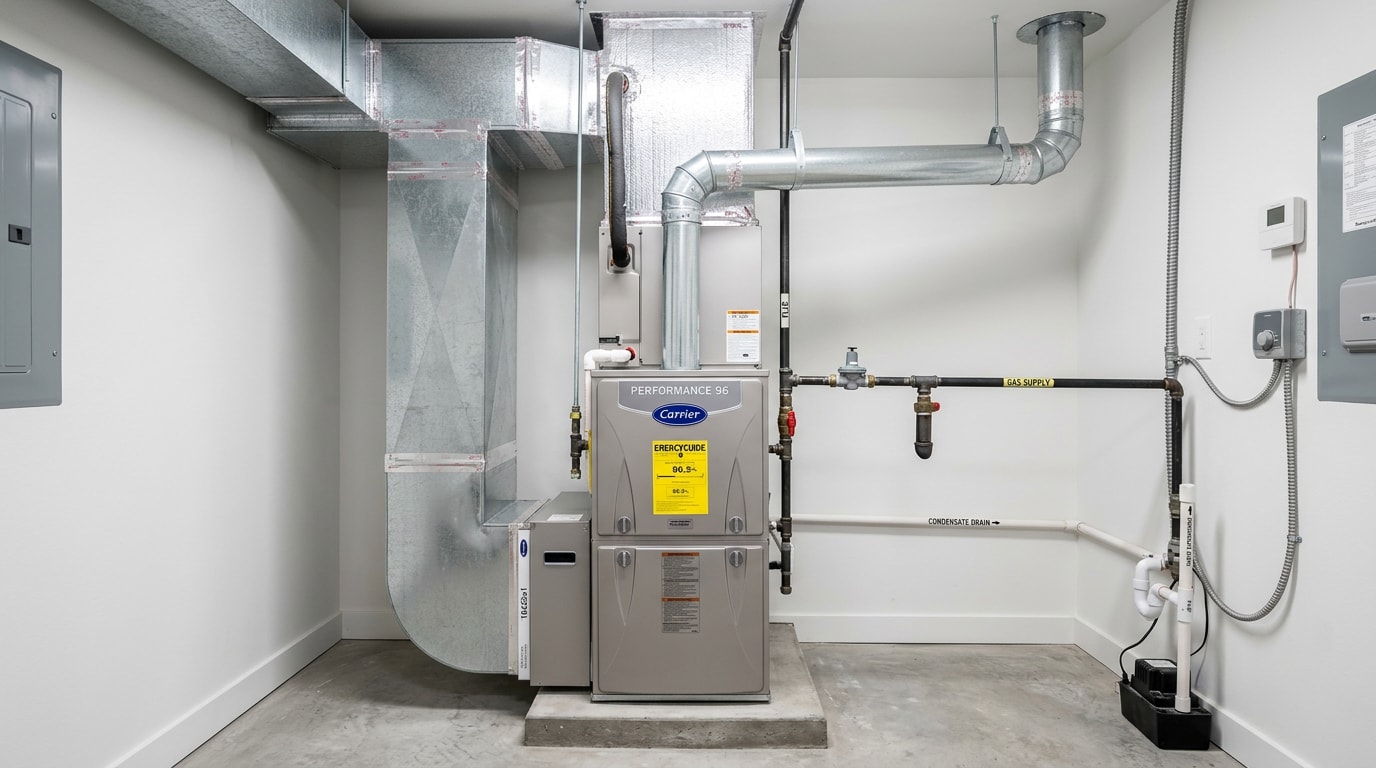
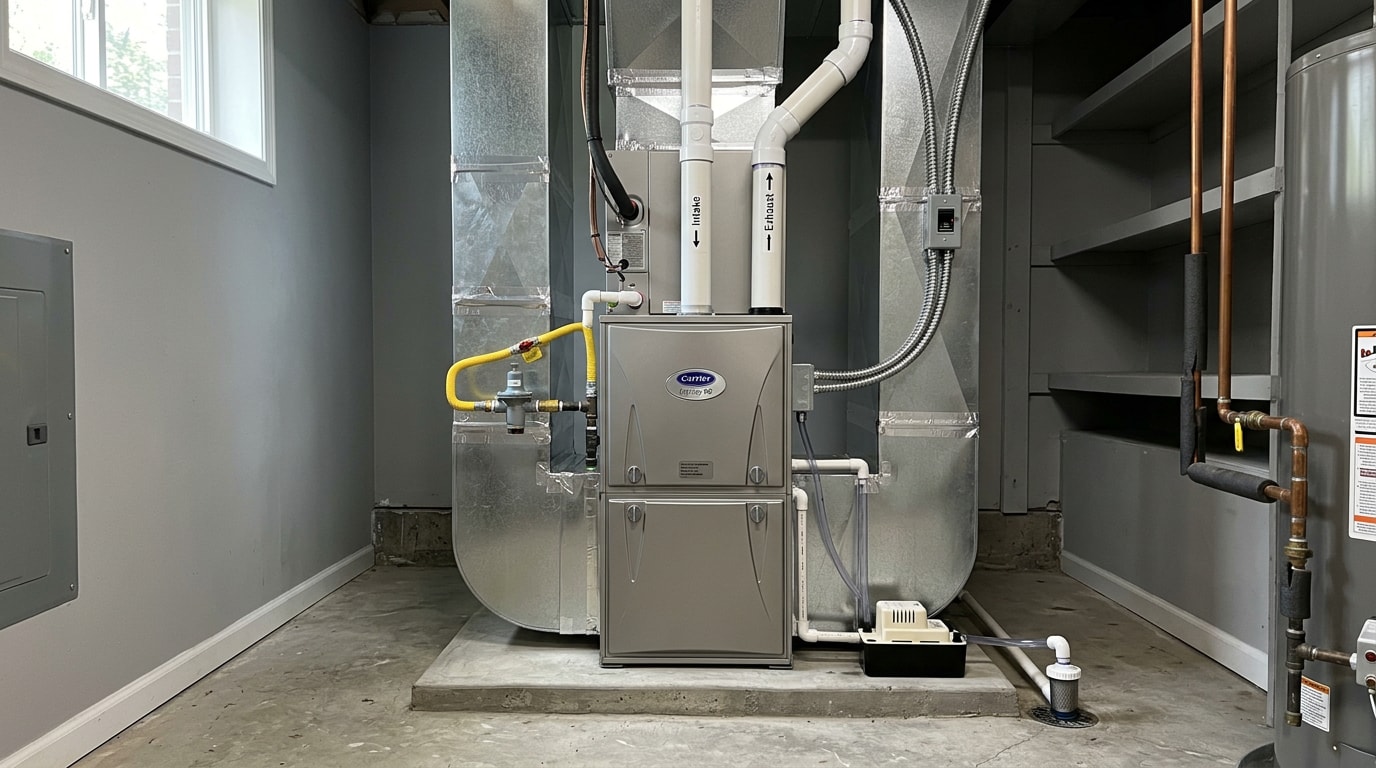
A gas furnace is the most common choice in neighborhoods with natural gas service. It heats quickly, handles cold snaps without strain, and typically costs less to run per unit of heat than electric resistance. It does require proper venting and an annual safety inspection.
Electric furnaces are simple, cheaper to install, and carry no combustion risk. The tradeoff is operating cost, since electric resistance heat converts electricity to heat at roughly a one-to-one ratio with no efficiency multiplier working in your favor.
A dual-fuel system pairs a heat pump with a gas furnace, switching to gas only when outdoor temperatures drop low enough to justify it.

| Type | Typical AFUE | Install Cost Range | Best For |
|---|---|---|---|
| Gas furnace | 80–98% | $3,500–$8,000 | Homes with gas service |
| Electric furnace | ~95–100%* | $2,000–$5,500 | Homes without gas lines |
| Dual-fuel system | 95%+ combined | $6,000–$12,000 | Mixed mild/cold climates |
*Electric furnace "efficiency" reflects heat conversion, not operating cost savings.
Not sure which fuel type fits your home? Schedule a free inspection and we'll walk through your gas access, ductwork, and electrical panel before you buy anything.
Furnace Efficiency: Understanding AFUE Ratings
AFUE stands for Annual Fuel Utilization Efficiency, the percentage of fuel a furnace converts into usable heat over a season. An 80% AFUE furnace sends 80 cents of every fuel dollar into the house and loses the rest up the flue. A 95% AFUE furnace keeps nearly all of it working for you.
Here's a detail most local guides skip: ENERGY STAR requires natural gas furnaces to achieve 90% AFUE in southern climates and 95% in northern climates to earn the label. Fayetteville sits squarely in that southern zone, so you don't need to chase the most expensive 97%+ unit to get ENERGY STAR performance here.
That said, federal minimums are changing. DOE published a final rule for consumer furnaces in the Federal Register setting a national minimum of AFUE 95% for non-weatherized gas furnaces, up from the longstanding AFUE 80% minimum , with compliance required for units manufactured on or after December 18, 2028. Doing the math on that jump: moving from an 80% to a 95% AFUE furnace cuts the fuel burned for the same heat output by roughly 16%, since you're paying for less wasted combustion, not more comfort.
All models that meet the ENERGY STAR product specifications are "condensing" furnaces, a technology that takes advantage of normally exhausted heat in the furnace's flue gas to improve efficiency , according to the U.S. Department of Energy. That's the technology behind every 90%+ AFUE furnace on the market today.
What Size Furnace Do I Need?
Furnace size should come from a Manual J load calculation, not square footage alone. That's a professional measurement of your home's actual heat loss and gain accounting for insulation, windows, orientation, and local climate data. Manual J is the ANSI standard for producing HVAC systems for small indoor environments, and a proper load calculation performed under it is required by national building codes and most state and local jurisdictions .
Guessing based on home size alone routinely leads to oversized units that cycle too often, or undersized ones that never quite catch up.
Staging matters too:
- Single-stage furnaces run at full blast or not at all, which can cause short-cycling in a mild climate like Fayetteville's.
- Two-stage furnaces adjust output between a low and high setting, improving comfort on milder days.
- Modulating furnaces fine-tune output continuously, running longer and gentler cycles.
A contractor following the ACCA Manual J standard can determine both the right BTU output and the right staging type for your home.
Choosing the Best Furnace for Your Fayetteville, GA Home
A furnace that's too small struggles to keep your home warm during a cold snap. An oversized unit cycles too frequently, which wastes energy and adds wear. Four things are worth weighing before you buy:
- Proper sizing from a real load calculation, not a guess.
- An efficiency rating matched to your climate zone and budget.
- Comfort technology, like variable-speed blowers and two-stage or modulating burners.
- Long-term reliability, meaning a reputable brand and a contractor who stands behind the install.
The best furnaces share a few traits: they're quiet, they keep a home evenly warm, and they need fewer repairs over their lifespan. If you're ready to compare options, our furnace installation page, linked here as {{SITE_URL}}/services/heating-contractor/furnace-installation, walks through what a proper Fayetteville installation involves.
How Much Does a New Furnace Cost in Fayetteville, GA?
Furnace pricing has a few moving parts. Equipment typically runs $800 to $6,000 depending on fuel type and efficiency tier. Labor adds $800 to $3,500. Permits and inspection run $100 to $500. Venting costs vary depending on whether a condensing furnace needs new PVC venting versus reusing an existing metal flue.
| Cost Component | Typical Range (2026) |
|---|---|
| Equipment | $800–$6,000 |
| Labor | $800–$3,500 |
| Permits & inspection | $100–$500 |
| Venting/fuel connection | $200–$2,000+ |
Georgia homeowners replacing an older unit in 2026 may also qualify for utility or manufacturer rebates on higher-efficiency equipment. The ENERGY STAR Rebate Finder lets you enter your zip code to find rebates and other special offers on ENERGY STAR certified products available in your area , so it's worth checking before you finalize a budget. Program availability and amounts change year to year, so confirm current terms directly rather than relying on a quote from last season.
All told, a full furnace replacement in the Fayetteville area generally lands between $4,500 and $10,000 installed, depending on system type and home size. If you want a county-by-county breakdown of what drives that number, our furnace replacement cost guide for Spalding County covers the same cost drivers in more detail.
When Should You Replace Your Furnace?
Rising energy bills, uneven heating between rooms, and a furnace well past its expected service life are all signs it may be time to consider replacement instead of another repair. A simple rule of thumb: if a repair costs more than about half the price of a new furnace and the unit is past 15 years old, replacement usually makes more financial sense.
Consider replacing when:
- The furnace is 15 to 20+ years old and needs a significant repair.
- The heat exchanger has cracked.
- Repair costs keep climbing year over year.
A cracked heat exchanger isn't just a cost consideration, it's a safety issue, which is exactly why annual inspection matters. If your furnace is already struggling, our furnace repair and emergency heating repair services cover both routine fixes and no-heat emergencies.
Maintenance Schedule That Keeps a Furnace Running
A well-maintained furnace can last 15 to 20 years or more. The routine is straightforward:
- Check the filter monthly.
- Replace a standard filter every one to three months.
- Schedule a professional fall tune-up that includes a heat-exchanger inspection, burner cleaning, and safety checks.
That heat-exchanger inspection matters for more than efficiency. The CDC recommends having your heating system and any other gas, oil, or coal burning appliances serviced by a qualified technician every year to catch carbon monoxide risks before they become dangerous. If your current plan has lapsed, our heating system maintenance page outlines what an annual visit typically includes, and our air filter replacement service handles the part most homeowners forget between visits.
Our team at HelpYourAC has installed and serviced furnaces throughout Fayetteville and the surrounding Fayetteville, GA area for years, and the pattern is consistent: the furnaces that last 20 years are the ones that got a real fall tune-up every single year, not the ones with the highest sticker-price AFUE rating.
FAQ
Do I Need to Replace My Furnace and Air Conditioner at the Same Time?
No. If one unit is in good working condition and below its life expectancy, there's no reason to replace it just because the other needs service. Replacing both together simply increases installation costs without adding comfort.
How Much Does It Cost to Convert an Electric Furnace to Gas?
Converting an electric furnace to a gas system typically adds $5,000 to $15,000 to the cost of installation, largely due to new gas line and venting work.
What AFUE Furnace Should I Buy in Fayetteville?
For most Fayetteville homes, a 90% to 96% AFUE condensing furnace is the sweet spot since ENERGY STAR only requires 90% in our southern climate zone. Ultra-high 96%+ modulating units cost more and deliver the steadiest comfort, though the payback is smaller here than in a northern climate with heavier annual heating use.
How Often Should a Furnace Be Serviced?
Once a year, ideally in early fall before heating season begins. This timing catches small problems, like a failing igniter or a dirty flame sensor, before they turn into a mid-winter breakdown.
How Long Does a Furnace Last in Fayetteville's Climate?
Most furnaces last 15 to 20 years in our climate, sometimes longer, because Fayetteville's furnaces run far fewer hours per year than units in colder states. Annual maintenance and correct sizing matter more to lifespan than the brand on the cabinet.
Is a Gas or Electric Furnace Better for a Fayetteville Home?
Gas is usually cheaper to run if your home already has gas service, since it heats faster and handles cold snaps without relying on expensive electric resistance backup. Electric furnaces make more sense for homes without a gas line, since running new gas service can cost more than the furnace itself.